Monday, September 7, 2015
Laser Diodes
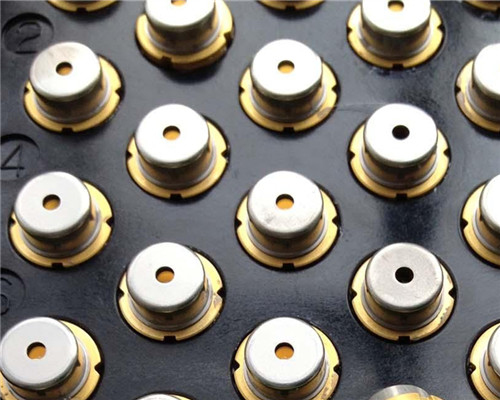
The laser diode is the basic laser component . It is a semiconductor similar to that found in a light-emitting diode. The laser diode is formed from a p-n junction and powered by injected electric current. There are many kinds of laser diode with the wavelength from 400nm - 1064nm. Most of the high power laser diodes are multi-mode, while < 300mW laser diodes are single mode.

Friday, May 17, 2013
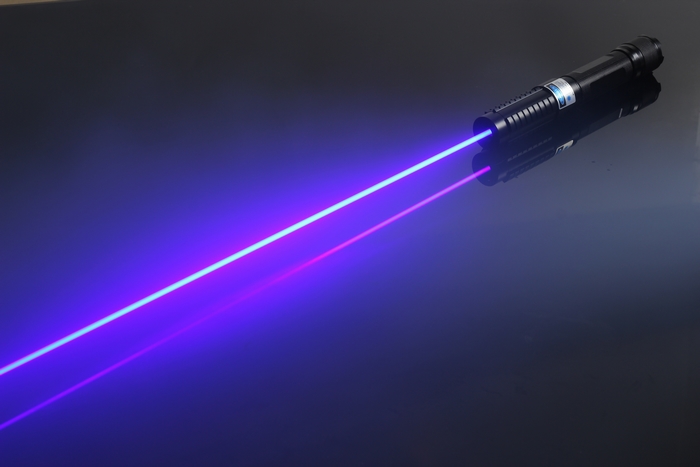
The 2W blue laser is a Class 4 laser that puts out up to 2000 milliwatts of power. The 2w blue laser beam is strong enough to burn holes, pop balloons, and start fires from across the room. The beam,with 50 miles range, is so bright that it can be seen from outer space! The most powerful and iconic handheld laser in the world is yours with affordable price.

Wednesday, September 5, 2012
BeamQ 1W Blue Laser Pointer
This laser is awesomely powerful and unimaginably bright.The beam is like something out of a mission impossible movie and you can burn pretty much anything instantly with this laser. It's a really powerful device when focused or unfocused. Unfocused from twenty feet,you'll feel warmth on your skin after a few seconds, but focused on your skin from any distance up to 20 feet and your skin will start stinging after only a few seconds; the closer you are the quicker the affect. It's amazing to see how quickly this laser can burn through plastics, especially dark plastics, wood, matches, magazines, cardboard... anything!
I bought this laser after having attempted to buy a lower mW laser from wickedLasers, I'd ordered the laser and waited 30 days with much conflict from the wickedLasers staff, and they kept telling me they'd ship my laser, but never did. I finally decided to cancel my order and go with BeamQ since I had been able to talk directly with the owner here previously and he'd made some quality guarantees. I ordered this laser and spoke with him over gtalk and he told me my laser would be shipped out in an hour! I was stunned at the amazing customer service given by beamQ, my laser was shipped that day, within the hour, and got to me in 8 days; way better than going 30 days without the product even shipping!
The laser came in a brown package that got a little beat up in transit, but nothing was harmed inside, everything was fairly securely wrapped - especially the lithium battery which was surrounded in 3 inches of bubble wrap. It comes with the laser, a battery and a charger (with cable) and the charger light starts out red and turns green when its fully charged. Battery charging from dead to full takes about 5 hours but even charging it 3 hours now and then will get you 6-7 hours of burning things.
The laser is exceptionally well built. There are rubber seals in every connection to prevent invasive water damage if submersed. The housing is all metal and a truly quality device. It's very sturdy and well built. You can feel the quality just in holding it, the weight and quality of construction are worth the price alone. On the back end is the part which you can unscrew to put your battery in, (negative side in first!) and on the tip of the back is also where the button is. The button alone is really high quality, its a firm and stable button which clicks down to turn on, and clicks down again to turn off. It's a really good sturdy button which is comfortable to press over and over again.
The instructions that came with anything in the box were all in chinese, so most of the things with the laser I had to figure out myself, although it was all fairly self explanatory.
Also in the box there is a Q-line carrying case for the laser, which is a nice sleeve to slide it into to prevent scratches while its in your pocket, or if you use the belt loop on its back, its a nice way to carry it.
Now for the focusing and using of the laser. To focus the laser, you simply turn the laser on by pressing the button on the back, aim at what you want it to be focused on, and twist the front end a direction until the dot is the smallest, and usually the surface you are aiming at starts to smoke. The only minor problem with the focus is that the lens on the inside of the head isn't entirely securely fitted in there, so if you focus it, then jostle it a bit, then aim back at the same point, the focus may have changed due to the lens wiggling a bit. I'm sure you could take off the head, put a drop of hot glue or electrical tape over the area and it'll be fixed completely, but that's pretty much the only flaw on this device, and it really is minor.
To sum things up, the service here at BeamQ is astounding and the shipping was fast(make sure you email and ask for a tracking number(which I was able to also put into the USPS tracking once it was in the U.S. to see where it was now that it was here in the states)), the product is of awesome quality, they're the only company I know of which sells authentically waterproof/water-resistant lasers, and they are a company of good trust. If they say a laser is 500mW at 445nm, thats exactly what you're going to get. There is no scam here, unlike other sites.
I'd recommend BeamQ to everyone I know over any other laser site simply due to customer service and quality of product which I received.
I bought this laser after having attempted to buy a lower mW laser from wickedLasers, I'd ordered the laser and waited 30 days with much conflict from the wickedLasers staff, and they kept telling me they'd ship my laser, but never did. I finally decided to cancel my order and go with BeamQ since I had been able to talk directly with the owner here previously and he'd made some quality guarantees. I ordered this laser and spoke with him over gtalk and he told me my laser would be shipped out in an hour! I was stunned at the amazing customer service given by beamQ, my laser was shipped that day, within the hour, and got to me in 8 days; way better than going 30 days without the product even shipping!
The laser came in a brown package that got a little beat up in transit, but nothing was harmed inside, everything was fairly securely wrapped - especially the lithium battery which was surrounded in 3 inches of bubble wrap. It comes with the laser, a battery and a charger (with cable) and the charger light starts out red and turns green when its fully charged. Battery charging from dead to full takes about 5 hours but even charging it 3 hours now and then will get you 6-7 hours of burning things.
The laser is exceptionally well built. There are rubber seals in every connection to prevent invasive water damage if submersed. The housing is all metal and a truly quality device. It's very sturdy and well built. You can feel the quality just in holding it, the weight and quality of construction are worth the price alone. On the back end is the part which you can unscrew to put your battery in, (negative side in first!) and on the tip of the back is also where the button is. The button alone is really high quality, its a firm and stable button which clicks down to turn on, and clicks down again to turn off. It's a really good sturdy button which is comfortable to press over and over again.
The instructions that came with anything in the box were all in chinese, so most of the things with the laser I had to figure out myself, although it was all fairly self explanatory.
Also in the box there is a Q-line carrying case for the laser, which is a nice sleeve to slide it into to prevent scratches while its in your pocket, or if you use the belt loop on its back, its a nice way to carry it.
Now for the focusing and using of the laser. To focus the laser, you simply turn the laser on by pressing the button on the back, aim at what you want it to be focused on, and twist the front end a direction until the dot is the smallest, and usually the surface you are aiming at starts to smoke. The only minor problem with the focus is that the lens on the inside of the head isn't entirely securely fitted in there, so if you focus it, then jostle it a bit, then aim back at the same point, the focus may have changed due to the lens wiggling a bit. I'm sure you could take off the head, put a drop of hot glue or electrical tape over the area and it'll be fixed completely, but that's pretty much the only flaw on this device, and it really is minor.
To sum things up, the service here at BeamQ is astounding and the shipping was fast(make sure you email and ask for a tracking number(which I was able to also put into the USPS tracking once it was in the U.S. to see where it was now that it was here in the states)), the product is of awesome quality, they're the only company I know of which sells authentically waterproof/water-resistant lasers, and they are a company of good trust. If they say a laser is 500mW at 445nm, thats exactly what you're going to get. There is no scam here, unlike other sites.
I'd recommend BeamQ to everyone I know over any other laser site simply due to customer service and quality of product which I received.
Tuesday, January 10, 2012
The Danger Of Green Laser Pointers
The Danger Of Green Laser Pointers
Twenty years ago, a green laser would set you back $100,000 and occupy a good-sized dining room table. Today, you can buy a green laser pointer the size of a ball point pen for $15.
These devices create coherent green light in a three step process. A standard laser diode first generates near infrared light with a wavelength of 808nm. This is focused onto a neodymium crystal that converts the light into infrared with a wavelength of 1064nm. In the final step, the light passes into a frequency doubling crystal that emits green light at a wavelength of 532nm.
All this can easily be assembled into a cigar-sized package and powered by a couple of AAA batteries.
The result are devices generally advertised to have a power output of 10mW.
Today, Jemellie Galang and pals from the National Institute of Standards and Technology and the University of Maryland say they've found worrying evidence that the output of some green laser pointers is much higher and more insidious. They describe one $15 green laser pointer that actually emits ten times more infrared than green light.
Galang and co are under no illusion as to the potential consequences of this. "This is a serious hazard, since humans or animals may incur significant eye damage by exposure to invisible light before they become aware of it," they say.
And the problem appears to be widespread. "We have found that this problem is common in low-cost green laser pointers, though its seriousness varies widely," they say.
That's not a good state of affairs. Any ordinary user would be entirely unaware of the problem because infrared light is invisible. However, Galang and buddies describe a simple way for anybody to detect these infrared emissions.
The method is to reflect the the beam off a standard CD which acts as a diffraction grating, and so separates light of different wavelengths. The diffracted light is reflected onto a piece of paper which displays the diffraction pattern. Many webcams are sensitive to infrared light or can be easily modified to detect it. So photographing the paper using such a camera shows the diffraction pattern of the green light and any infrared light produced too.
The team hasten to emphasize the safety procedures that must be used during such an experiment.
They also take apart the green laser pointer in question to identify the cause of the problem. The design ought to include an infrared filter that blocks any infrared light that isn't converted to green light. However, the culprit they bought not only did not have the filter, it did not have a slot for such a filter. "We thus believe that the absence of the filter in this case was due to a design decision," they say
So somebody somewhere has removed the filter from the design, presumably to reduce costs. If that isn't a criminal act, it ought to be.
Wednesday, January 4, 2012
Laserpointerforums laser pointer reviews
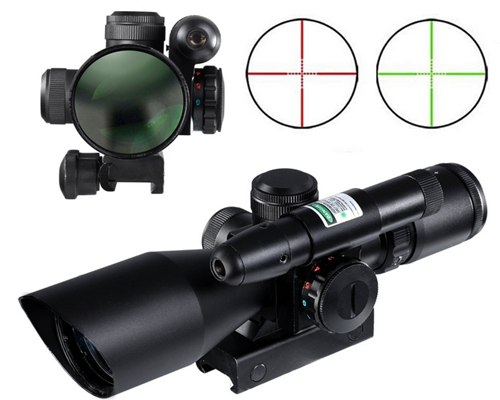
Laser pointers are most commonly used during presentations, allowing a speaker to point to areas on the display screen from across the room. Red laser beam pointers are the most common type and use a lower powered light, normally a 650nm wavelength. You can get a common red laser pointer for less than $20 today (see below for online shopping sites for laser pointers). Green laser pointers have recently become more popular and are powered by a more powerful laser (usually a 532nm wavelength), making them much more visible that red lasers. Some green laser pointers are more than 50 times more powerful than the red ones, and can even burn paper and cast a visible beam even in a lighted room. The low-end green laser pointers start at about $50 and can go up to several hundred dollars for a more high powered one.
You will see lots of laser pointer reviews at :
laserpointerforums laser pointer reviews
Tuesday, December 20, 2011
Firedragon 532nm 300mW (DinoDirect)
Firedragon 532nm 300mW (DinoDirect)
Ethics / Disclosure:
- I paid for this laser, it was NOT a "freebie" or review unit. I ordered it through their site like normal.
- The link to the laser below does NOT contain any referral or affiliate code.
- DinoDirect DID give me a discount on the purchase, and it was essentially equal to the discount that all group-buy participants will get (in other words, they gave me the groupbuy rate early).
- DinoDirect DID know that I was purchasing this unit to review it, in fact, that was part of the groupbuy terms that I gave DD when they asked if I would help. I wanted to review the laser first. The natural question then becomes "did they cherry pick the laser they sent for review?". Frankly, there's no way to know. However, I don't believe they did, because this unit reviews almost exactly the same way as my previous 300mW 532 from DD's "certified power" line would have. Same actual power specs, divergence, quality, etc.
DinoDirect - Firedragon-III 532nm 300mW Green Laser (Certified Power Guaranteed)
Power is stable and above spec (400mW peak)
The unit is obviously IR filtered, with very little leakage (17mW)
The unit is well made, comes with a battery and charger, and shipped fast.
The divergence is not very good (the beam is thick).
With a decent 18650, the unit LPMs to a peak of just over 400mW. The curve is steady, stable, and doesn't show any "pain" along the way. During the divergence testing (later in this review) I left the laser running for almost 10 minutes at one poitn. There was no hint of any difficulties, even at the 10 minute mark. The unit was warm, but nowhere near "hot". In other words, this laser passes the "300mW" spec with flying colours, and I have no concerns over stability.
The next concern is always IR leakage, and specifically, the amount of a given power reading that should be attributed to IR. I tested this using 532nm blocking glasses. While blocking 532nm light, the glasses let IR through (I verified this with an infrared laser). The LPM peaked at 17mW. It is worth noting that of that 17mW, some of it was actually 532nm light that leaked through the glasses (I could see some green on the sensor). So the amount of IR leakage is less than 17mW.
The divergence is not good. The dot is about 4mm when measured ~50 cm from the laser. The dot is closer to 15mm at roughly ~8 meters (25 or 30 feet). This was the same experience I had with my previous 300mW DD laser from this "certified power" line, and I think it is what should generally be expected. Others who've purchased these lasers report the same. This doesn't bother me, since at 25 or 30 feet, I can't actually tell how big the dot is. IE, I can't tell the different between a bright 4mm dot and a bright 15mm dot, from a distance of 25 or 30 feet. The dot is so bright that it just overwhelms my vision. To take those photos, I had to turn the exposure on my camera way down. However, some people really care about getting great divergence specs, and a thin beam. You'll be disappointed by this laser if that's the case.
Subscribe to:
Posts (Atom)